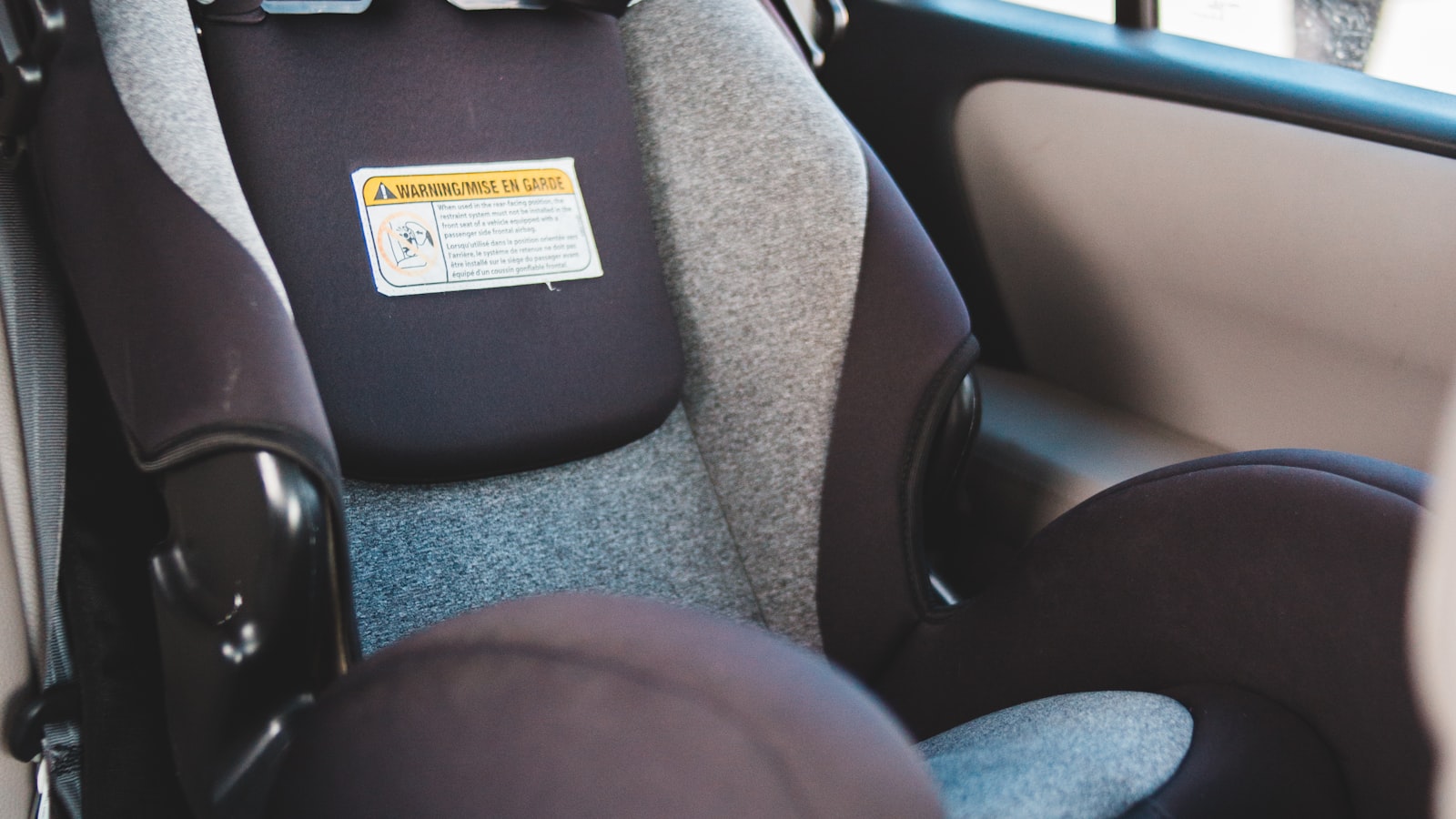
Every car seat sold in the US passes the same federal crash standard, FMVSS 213 — a $50 seat and a $500 seat cleared the same bar 1. NHTSA's star ratings measure ease of use, not crash performance 1. The seat that protects your child is the one that fits your car, fits your child, and is installed correctly — so get the installation checked.
Every car seat legally sold in the United States has to pass the same federal safety standard, FMVSS 213 — a $50 seat and a $500 seat both cleared the same crash-test bar 1. That's genuinely reassuring, but it also means the differences between seats aren't really about safety in the way marketing implies. What actually determines whether a seat protects your child in a crash is choosing the right type for their size, and installing it correctly.
What NHTSA's ratings actually measure
The National Highway Traffic Safety Administration does publish car seat ratings, but they measure ease of use — how straightforward the seat is to install and adjust correctly — not crash performance 1. That distinction matters because installation error is, by NHTSA's own data, the leading cause of car seats failing to protect a child in a real crash. An easier-to-install seat that a parent actually installs correctly every time is a meaningfully safer choice than a harder one that gets installed slightly wrong.
A newer standard, FMVSS 213a, adds a mandatory side-impact crash test to the federal requirements — which is worth knowing mainly because "side-impact tested" has been a marketing claim for years without a standard behind it.
Rear-facing, for longer than you'd expect
Both the AAP and NHTSA recommend keeping a child rear-facing for as long as the specific seat's height and weight limits allow — at minimum until age 2, and often well beyond it with a convertible seat 12. Correctly used seats cut injury risk by about 71% compared with a seat belt alone 3. Rear-facing distributes crash forces across the whole back and head rather than concentrating them on the neck, which is why it stays the safer position for as long as a seat physically accommodates it, not just as a newborn stage to graduate out of quickly.
Two things that worry parents about extended rear-facing, and shouldn't: bent legs are comfortable for children and are not a leg-injury risk, and a child being "bored" facing backwards is not a safety consideration. Height or weight limits are what end rear-facing, not birthdays.
The full progression
Stage | When | Notes |
|---|---|---|
Rear-facing | Birth until the seat's rear-facing height/weight limit — minimum age 2 | The longest and most protective stage 2 |
Forward-facing with harness | After outgrowing rear-facing, until at least age 4 and the harness limit | Keep the top tether attached — it is frequently skipped |
Booster | Until an adult belt fits properly, commonly age 8–12 | Positions the adult belt correctly over the body |
Adult seat belt | When it passes the 5-step test | Back against the seat, knees bend at the edge, belt on thighs and shoulder |
Back seat | Until age 13 | Regardless of size |
The three main types
Infant seats: rear-facing only, portable with a base, typically used from birth to roughly 22–35 lbs depending on the model
Convertible seats: rear-facing first, then forward-facing later, with much higher rear-facing weight/height limits than infant seats — many families move to these specifically to extend rear-facing time
All-in-one seats: convertible seats that also convert to a booster later, covering the longest span but often bulkier
Whatever seat you choose, get the installation checked. Most local fire departments and many hospitals offer free car seat inspections by a certified Child Passenger Safety technician — this single step addresses the biggest real-world safety gap more than any seat comparison can 2.
The installation errors that actually happen
Most mistakes fall into a short list, and all are checkable in two minutes:
A loose install. Grip the seat at the belt path and pull firmly — it should move less than an inch side to side or front to back.
Harness straps too loose. Pinch the webbing at the shoulder; if you can pinch a fold, it's too loose.
Chest clip in the wrong place. It belongs at armpit level, not on the belly.
Wrong harness slot height. Rear-facing: straps at or *below* the shoulders. Forward-facing: at or *above*.
Top tether not attached on a forward-facing seat. It substantially reduces head movement in a crash and is skipped constantly.
Using LATCH and the seat belt together when the manual doesn't allow it — and forgetting that LATCH anchors have a weight limit, after which you must switch to the seat belt.
Bulky winter coats. Compressible padding leaves the harness dangerously loose in a crash. Harness first, then a blanket or coat on top, backwards.
Do not use aftermarket products that did not come with your seat — strap covers, head supports, seat protectors, buckle covers, or toys that attach to the seat. They are not covered by the crash testing your seat passed, and they can change how the harness performs. If it didn't come in the box or isn't listed in the manual, it wasn't crash-tested with your seat.
Still reading? You might want the next one in your inbox.
New guides go out the moment they're published — no noise in between.
What to actually check before buying
Does it fit your specific vehicle? Not all seats fit all back seats — check reviews or manufacturer fit guides for your car model
Height and weight limits, both rear- and forward-facing, since these vary significantly between models
Expiration date — car seats expire (usually 6–10 years from manufacture) as plastic and foam degrade over time
Never buy a used seat without a fully known history — seats involved in even minor crashes should be replaced
Register the seat with the manufacturer. It costs nothing and is the only way you'll be told directly about a recall
Secondhand seats: what has to be true
A hand-me-down seat can be fine, but every one of these has to check out, and if you can't confirm even one, don't use it:
It has never been in a crash, and you know that from someone you trust
It is not expired — check the stamped date on the shell
It has all its original parts and the manual, with no substituted straps
It has no recalls outstanding
It has no cracks in the shell, and no mould or damage from storage
After any crash, ask whether the seat needs replacing — many do even when damage isn't visible, and your insurer often covers replacement. Seek medical assessment for a child after a crash even if they seem fine, particularly for any head impact, and go to an emergency department immediately for vomiting, drowsiness, unequal pupils, or unusual behaviour afterwards. For premature or low-birthweight infants, ask about a car seat tolerance screening before discharge — some babies need a car bed instead.
FAQ
Are expensive car seats safer?
Not in crash terms. Every seat sold in the US meets the same federal standard 1. Price buys convenience, fabric, and easier installation.
What do NHTSA's star ratings measure?
Ease of use — how easy the seat is to install and adjust correctly — not crash performance 1.
How long should my child stay rear-facing?
Can my child wear a winter coat in the seat?
No. Buckle them in without it, then put the coat on backwards over the harness.
Do car seats really expire?
Yes, typically 6–10 years from manufacture. Plastics and foam degrade, and standards change.
Is it safe to use a secondhand seat?
Only if you can confirm no crash history, no recall, not expired, all parts present, and no damage.
Every seat passed the same crash test, so buy the one that fits your car and that you can install correctly every time — and then have it checked for free by a certified technician. Rear-face to the limit of the seat, keep the tether attached forward-facing, skip aftermarket add-ons, register the seat, and never use a secondhand one with an unknown history.
Sources
Every claim, sourced
3 sources cited in this guide
- 1Car Seats and Booster Seats — National Highway Traffic Safety AdministrationFederal safety guidance · Accessed September 2026
- 2Car Safety Seats: A Guide for Families — American Academy of Pediatrics (HealthyChildren.org)Clinical guidance · Accessed September 2026
- 3Child Passenger Safety — Centers for Disease Control and PreventionPublic health guidance · Accessed September 2026