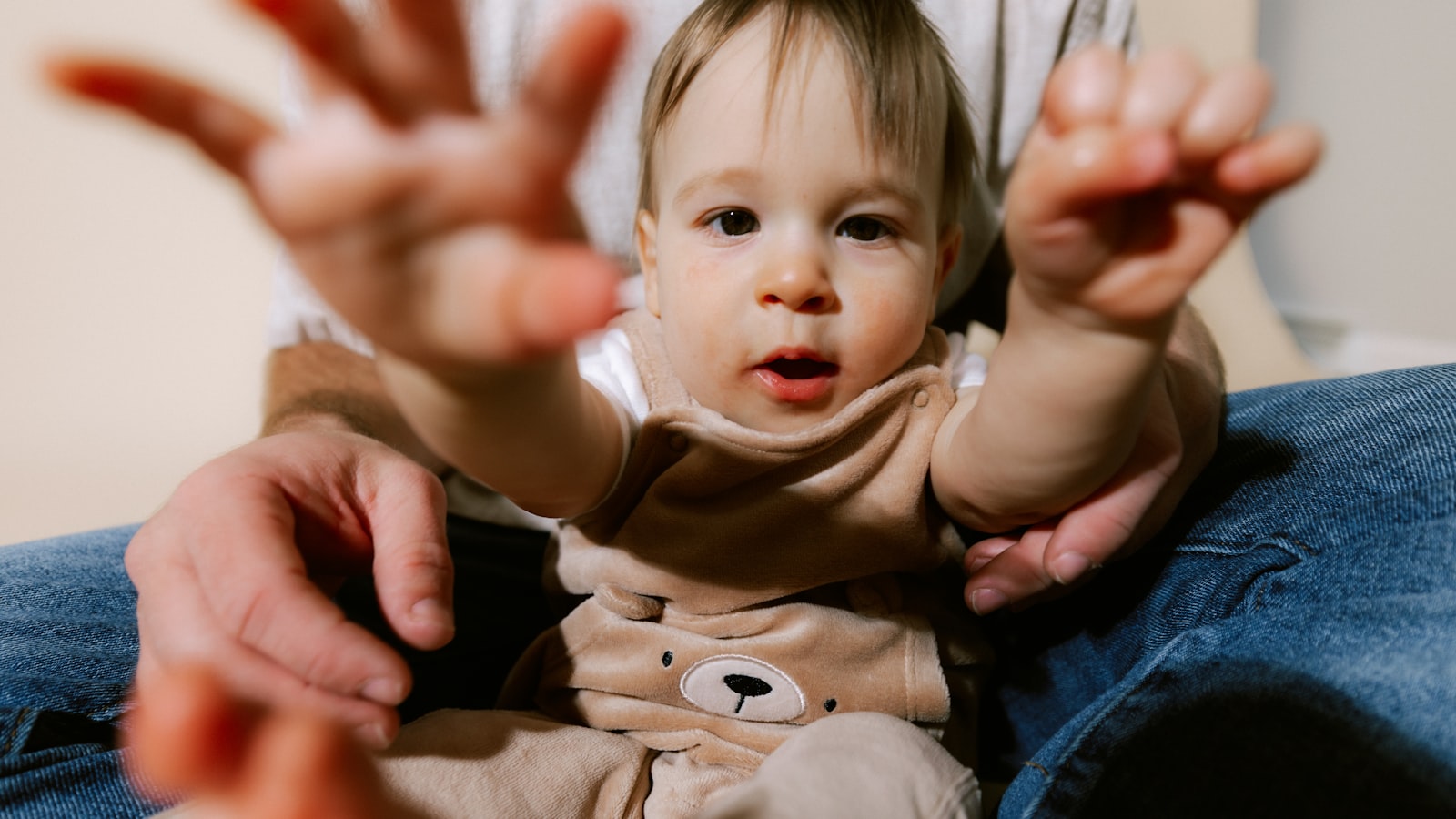
Separation anxiety is a developmental milestone, not a setback — it means your baby has worked out that you still exist when you leave, without yet trusting that you come back. It usually becomes noticeable around 9 months, peaks between 9 and 18 months, and eases by about age 2 1. Short, consistent goodbyes work better than long ones.
A baby who was previously happy to be held by a grandparent or left in a nursery suddenly protesting every separation isn't regressing — they're hitting a real developmental milestone. Separation anxiety happens because a baby has developed something they didn't fully have before: object permanence, the understanding that people and things still exist even when out of sight.
When it typically starts
Separation anxiety commonly becomes noticeable around 9 months old, though the American Academy of Pediatrics notes it can start as early as 4 to 5 months in some babies 1. It tends to peak somewhere in the 9-to-18-month range and generally eases by around age 2, once a child has enough experience to trust that a parent leaving reliably means a parent coming back 12.
Why it happens when it does
Before object permanence develops, out of sight genuinely means out of mind — a baby isn't distressed by a parent leaving the room because, as far as they understand, that parent has simply ceased to exist. Once object permanence clicks, a baby understands the parent still exists somewhere else, without yet understanding the part that comes next: that the parent reliably returns. That gap between understanding absence and trusting return is what separation anxiety actually is.
There's a second ingredient that makes the timing sharper still: babies at this age have no working sense of duration. "Back in ten minutes" and "gone forever" are indistinguishable. The only way to close that gap is repetition — leaving and coming back, many times, until the pattern becomes predictable.
Separation anxiety vs. stranger anxiety
These overlap and get conflated, but they're different and can appear at different times:
Separation anxiety | Stranger anxiety | |
|---|---|---|
Trigger | You leaving | An unfamiliar person approaching |
Typical onset | Around 9 months, sometimes from 4–5 months 1 | Around 6–8 months |
What settles it | Your return, and practice | Time, distance, and letting the child set the pace |
What makes it worse | Long, drawn-out goodbyes | A stranger approaching fast or making direct eye contact |
Both are signs of healthy social development. A baby who has begun sorting people into "mine" and "not mine" is doing exactly what they should be.
A toddler who seemed completely fine with separations as a younger baby sometimes develops noticeable separation anxiety later, around 15–18 months — this is a normal, common pattern, not a sign that something regressed.
What actually helps, based on AAP guidance
Time separations around your baby's needs — avoid leaving right when they're overtired or hungry, since that stacks discomfort on top of the separation itself 1
Keep goodbyes brief and warm — a hug, a short goodbye phrase, then go, rather than lingering, which tends to prolong distress for both of you 1
Build a consistent goodbye ritual — the same words, the same small routine, every time, so it becomes familiar rather than unpredictable 1
Practice short separations deliberately, building up gradually, rather than only experiencing long separations for the first time 1
Trust that distress at the moment of separation, even if it's intense, is very often much shorter-lived once you're actually out of sight — caregivers frequently report a baby settling within minutes 2
Never slip out without saying goodbye, however tempting it is when your baby is finally distracted. It avoids one bad moment and buys a worse problem: a baby who learns you can vanish without warning becomes more vigilant, not less, and starts protesting long before you leave. A short, honest goodbye every time is what builds the predictability the anxiety is waiting for.
Peekaboo is practice, not just a game
Games where something disappears and comes back are object permanence training, and babies gravitate to them at exactly this age for a reason.
Peekaboo — the simplest version of "gone, then back."
Hiding a toy under a cloth and letting them find it.
Talking from another room so your voice proves you still exist out of sight.
Short deliberate exits — step out, say "back in a minute," come back, make the return unremarkable.
The last one is the most useful and the least used. Practising separations when nothing is at stake builds the evidence base your baby draws on when the separation actually matters.
Still reading? You might want the next one in your inbox.
New guides go out the moment they're published — no noise in between.
Starting daycare or a new carer
The transition is easier when the separation isn't the only new thing happening that day:
Visit together first if you can, so the room and the people are familiar before you're not there.
Hand over to a specific person, not to a room. A named adult who takes your baby is a far easier bridge than a doorway.
Send a comfort object where the setting allows — a familiar cloth or toy that smells of home.
Say goodbye and go. Then let the staff do their job; most will happily text you once your baby settles, and you should feel free to ask for that.
Expect a delayed reaction. Plenty of babies cope well at drop-off and fall apart at pickup, or sleep badly for a week or two. That's the adjustment, not a verdict on the setting.
Night wakings at the same age
It's no coincidence that sleep often gets worse between 8 and 18 months. A baby who has just understood that you exist elsewhere will notice, on waking, that you are elsewhere — and the same anxiety applies at 2am as at daycare drop-off.
The response is the same principle: predictable, brief, reassuring. A consistent bedtime routine, a reliable short response to waking, and time. This phase passes on the same curve as the daytime version.
Most separation anxiety needs patience rather than intervention. Raise it with your pediatrician if the distress is extreme and shows no improvement with familiarity over weeks, if it's significantly interfering with eating, sleeping or your child's willingness to explore, if it appears or sharply worsens after age 2 or persists into school age, or if your child is inconsolable for long periods with a familiar carer. Persistent, impairing separation fear in an older child can be separation anxiety disorder, which is recognised and very treatable. Also raise any loss of previously gained social skills — that's a different signal and worth prompt attention.
FAQ
When does separation anxiety start and end?
Commonly noticeable around 9 months, sometimes from 4–5 months, peaking between 9 and 18 months and easing by about age 2 1.
Should I sneak out to avoid the crying?
No. It avoids one hard moment but teaches your baby you can disappear without warning, which usually makes them clingier.
My baby screams at drop-off. Am I doing harm?
No. Brief distress at separation followed by settling is normal, and most babies calm within minutes once you're out of sight 2.
Why has it come back at 18 months when it was fine at 12?
A second wave around 15–18 months is a common, normal pattern rather than a regression.
Is separation anxiety a sign of poor attachment?
The opposite. It indicates a specific, healthy attachment has formed.
When is it more than a phase?
If it's extreme, not improving over weeks, interfering with eating, sleep or exploration, or appearing for the first time after age 2, it's worth raising with your pediatrician.
This is a milestone, not a problem to solve. Your baby has learned you still exist when you go; what they haven't learned yet is that you come back — and only repetition teaches that. Keep goodbyes short, consistent and honest, never sneak out, practise small separations when nothing's at stake, and expect the night wakings to follow the same curve.
Sources
Every claim, sourced
2 sources cited in this guide
- 1How to Ease Your Child's Separation Anxiety — American Academy of Pediatrics (HealthyChildren.org)Clinical guidance · Accessed September 2026
- 2Separation Anxiety in Babies and Toddlers — Cleveland ClinicClinical guidance · Accessed September 2026