Age changes the rules more than symptoms do. Any fever in a baby under 3 months is a same-day call, regardless of how well they seem 1. Never give over-the-counter cough or cold medicine to a child under 4 3. And watch breathing, not mucus — fast breathing, ribs pulling in, or nostrils flaring means get seen, whatever the temperature is.
A baby's first cold is a genuine milestone in a different sense than the usual ones — it's often the first time a parent has to decide, in real time, whether something is ordinary or something that needs medical attention. The single biggest factor in that decision isn't the symptom itself; it's your baby's age.
Fever thresholds change by age — this is the key detail
Any fever in a baby younger than 3 months warrants a same-day call to your pediatrician, full stop, regardless of how mild the rest of the cold seems — young infants can get seriously ill quickly, and their immune response doesn't reliably show how sick they are 1. For babies 3 to 6 months, call if their temperature reaches 100.4°F (38°C) and they seem unwell, or if it's higher than that regardless of how they seem. For babies 6 to 24 months, call if a fever above 100.4°F lasts more than one day 1.
Age | What counts as "call now" |
|---|---|
Under 3 months | Any temperature of 100.4°F (38°C) or above — same-day, always |
3–6 months | 100.4°F with any sign of being unwell, or anything higher regardless |
6–24 months | Above 100.4°F lasting more than a day |
Any age | Breathing difficulty, dehydration, or a baby who seems seriously unwell |
Fever thresholds are specifically age-dependent, not one-size-fits-all. A fever that would be a wait-and-see situation in an 8-month-old is a same-day call in a 6-week-old. When in doubt about your baby's age bracket, call.
Take the temperature properly
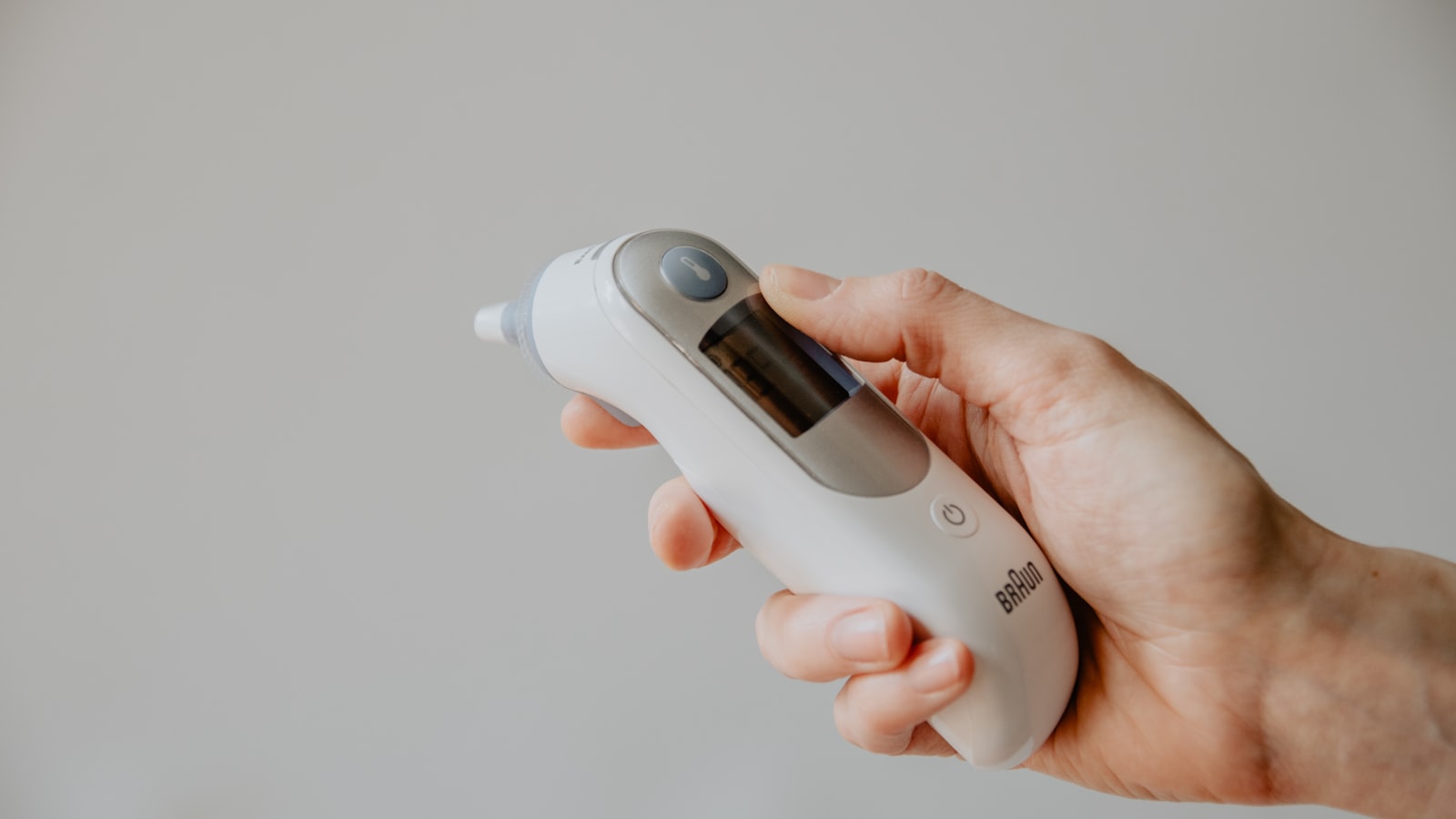
The number only means something if it's measured in a way that's reliable at this age. For infants, a rectal temperature is the standard, and it's what your pediatrician will ask for. Forehead and ear thermometers are convenient but less reliable in young babies, and armpit readings run low — which matters enormously when the entire decision hinges on whether you've crossed 100.4°F.
If you call about a fever, say which method you used. "100.2 under the arm" and "100.2 rectally" are different pieces of information.
Other symptoms that warrant a call regardless of age
Trouble breathing, fast or labored breathing, or a cough paired with hard breathing
Ear pain, or pulling at the ears repeatedly
Symptoms lasting more than 10 days without improvement
A scary or unusual cry, or a baby who isn't waking normally to eat
Any symptom that genuinely worries you — Mayo Clinic is explicit that this is reason enough to call on its own 1
Watch the breathing, not the mucus
This is the part that most changes outcomes, and it gets less attention than fever because there's no number attached.
Signs of genuine respiratory distress in an infant:
Retractions — the skin pulling in between or below the ribs, or at the base of the throat, with each breath
Nasal flaring — nostrils widening with each breath
Fast breathing at rest, or grunting at the end of each breath
Head bobbing in time with breathing
Blue or grey tinge around the lips, gums or tongue — a medical emergency
Pauses in breathing, at any age, always an emergency
Being too breathless to finish a feed
A baby with a thoroughly gunky nose who is feeding, settling and breathing comfortably is usually fine. A baby with a modest cough who is working visibly hard to breathe is not.
RSV and bronchiolitis
Most colds in babies are ordinary. RSV is the one worth knowing by name, because in infants it frequently causes bronchiolitis — inflammation of the small airways — which can be severe. In the US, roughly 50,000–80,000 RSV-associated hospitalisations occur each year in children under five 4.
What makes RSV distinctive is its timing: it often looks like an ordinary cold for two or three days, then gets worse around days 3 to 5, which is exactly when a parent expects improvement. Wheezing, fast breathing, retractions, and difficulty feeding are the signs to act on.
Still reading? You might want the next one in your inbox.
New guides go out the moment they're published — no noise in between.
There is now prevention available. Nirsevimab, a long-acting monoclonal antibody approved in 2023, is recommended for infants under 8 months entering their first RSV season where the pregnant parent did not receive the RSV vaccine, and for some higher-risk children aged 8 to 19 months entering a second season 4. Whether it applies to your baby is a question for your pediatrician, and it's worth asking before RSV season rather than during it.
What a typical mild cold looks like
Runny or stuffy nose, mild cough, sneezing, and slightly reduced appetite are common with an ordinary cold and don't necessarily need a call on their own, especially in an older, otherwise well infant who's still feeding and interacting normally 2. Colds in babies commonly run about a week to ten days.
Babies also get a lot of them — six to eight colds in the first year is entirely normal, and more once in group childcare. A run of back-to-back colds over a winter usually reflects exposure rather than a problem with your baby's immune system.
What actually helps at home
Saline drops and a bulb or nasal aspirator to clear a stuffy nose, especially before feeds and sleep
A cool-mist humidifier in the room, cleaned regularly
Extra feeds — hydration matters more than volume with a sick baby, so shorter and more frequent is fine
Upright holding while awake, which is more comfortable than lying flat for a congested baby
For a cough in babies over 12 months, a small amount of honey can help. Never under 12 months, because of botulism risk
Do not give over-the-counter cough and cold medicines to children under 4. Manufacturers label them not for use under 4, and the FDA warns they can cause serious side effects including dangerously slowed breathing in infants and young children 3. Children under 2 should not be given any product containing a decongestant or antihistamine 3. Prescription cough medicines containing codeine are not for children.
Do not raise the head of the crib or use a wedge, positioner or inclined sleeper to help a congested baby. Sleep stays flat, firm and empty even during illness — a propped surface lets a baby slide into a position that compromises the airway. Run a humidifier and clear the nose before sleep instead.
Call emergency services for blue or grey lips, gums or tongue, pauses in breathing, a baby who is limp or unresponsive, or a seizure. Seek same-day care for any fever in a baby under 3 months, visible retractions or nasal flaring, breathing too fast or too laboured to feed, signs of dehydration (fewer than the usual wet diapers, no tears, a sunken soft spot, a dry mouth), a baby who is unusually difficult to rouse, or a rash that doesn't fade when pressed. Also call if symptoms improve and then clearly worsen again — that pattern can signal a secondary infection.
FAQ
My 6-week-old has a fever of 100.5°F but seems fine. Do I wait?
No. Under 3 months, any fever of 100.4°F or above is a same-day call regardless of how well your baby seems 1.
Can I give infant cough medicine?
Not under 4 years. The FDA warns of serious risks including slowed breathing, and products are labelled not for use at that age 3.
How long should a baby's cold last?
Usually about 7 to 10 days. Beyond 10 days without improvement is worth a call 2.
Is it normal to get this many colds?
Yes — six to eight in the first year is typical, and more in group childcare.
Should I prop the mattress to help with congestion?
No. Sleep surfaces stay flat and firm even during illness. Use saline, suction and a humidifier instead.
How do I know if it's RSV rather than a cold?
You often can't at first — RSV commonly worsens around days 3 to 5. Wheezing, fast breathing, retractions or trouble feeding are the signals to get seen 4.
Age sets the threshold: under 3 months, any fever is a same-day call. Measure rectally so the number means something. Watch breathing — retractions, flaring, fast breathing — rather than how much mucus there is. No OTC cough or cold medicine under 4, no honey under 1, and no propping the mattress, ever.
Sources
Every claim, sourced
4 sources cited in this guide
- 1
- 2
- 3Use Caution When Giving Cough and Cold Products to Kids — U.S. Food and Drug AdministrationSafety communication · Accessed September 2026
- 4Use of Nirsevimab for the Prevention of Respiratory Syncytial Virus Disease Among Infants and Young Children — Centers for Disease Control and Prevention (MMWR), 2023Public health guidance · Accessed September 2026